Proje Anlık Görüntüsü
| Öğe |
Detaylar |
| Sanayi |
Sivil Havacılık / Havaalanı Operasyonları |
| Bölge |
Kuzeydoğu Asya |
| Çevre |
Yüksek kuş etkinliği olan bir bölgede, büyük bir göç yolu boyunca koruma altındaki sulak alan ve haliç habitatlarının yakınında bulunan kıyı merkezi havaalanı |
| Temel Zorluk |
Gece veya olumsuz hava koşullarında gerçek zamanlı kuş tespiti yok; erken uyarı menzili yok; sürü miktarı verisi yok |
| Radar Yerleştirildi |
2 × MR-RDT10K Düşük İrtifa Gözetleme Radarı |
| Kamera Yerleştirildi |
7 × MR-HTVC12035-2132 Uzun Menzilli PTZ Termal Kamera |
| Platform |
Birleşik kuş risk yönetim platformu – GIS (CBS) görüntüleme, risk bölgelendirme, otomatik uyarılar, oynatma, istatistikler, tablet saha arayüzü |
| Proje Süresi |
24 ay (12 ay inşaat + 12 ay mevsimsel optimizasyon) |
| Ana Sonuç |
Tüm pist bölgelerinde 7/24 her türlü hava koşulunda kuş izleme, otomatik risk derecelendirmesi ve saha ekibinin gerçek zamanlı yönlendirilmesi |
Arka plan
Kuş çarpmaları, ICAO, FAA ve EASA tarafından öncelikli bir endişe olarak tanınan, en tutarlı bir şekilde belgelenmiş havacılık güvenliği risklerinden birini temsil etmektedir. Bu havaalanı, Kuzeydoğu Asya'nın kıyı bölgesinde bulunan ve yıl boyunca yüksek kuş aktivitesine sahip önemli bir uluslararası merkezdir. Çevredeki korunan sulak alan ve haliç habitatları, pist sisteminin sadece birkaç kilometre içinde yer almakta olup, büyük ölçekli kuş hareketlerinin sıklıkla yoğun uçuş operasyonlarıyla örtüştüğü mevsimsel göçlerde artan sürekli bir maruziyet yaratmaktadır.
Havalimanının mevcut kuş yönetimi, yer devriyelerine, kule gözlemine ve kuşlar zaten görüldüğünde yapılan tepkiye dayanıyordu. Hava trafiği hacmi arttıkça bu yaklaşımı giderek yetersiz kılan dört sınırlama vardı:
• Gece veya düşük görüş koşullarında izleme yok: Görsel izleme, karanlık, sis veya yağmur gibi normal uçuş operasyonları sırasında devam eden koşullarda kuş hareketini takip edemez
• Yetersiz uyarı menzili: Kuşlar pistlerin yakınında görsel olarak tespit edildiğinde, bir uçağın yaklaşma veya kalkış koşusu öncesinde dağıtılması için süre genellikle çok kısa oluyordu
• Sürü ölçümü yok: Operatörlerin sürü yoğunluğunu, irtifa dağılımını veya hareket yönünü ölçmenin sistematik bir yöntemi yoktu, bu da risk değerlendirmesini öznel ve vardiyaya bağımlı hale getiriyordu
• Habitat müdahalesi için veri yok: Sürekli gözlem kayıtları olmadan, havaalanı çevresinde kuş çekici azaltma çalışmalarını hedeflemek için kanıt temeline sahip değildi
Kuş çarpma olayları artış eğilimindeydi ve bu durum uçak hasarına, plansız bakımlara ve operasyonel gecikmelere katkıda bulunuyordu. Bir geçiş radar tabanlı, sensör birleştirilmiş tespit sistemi ICAO Doc 9137 ile uyumlu olarak operasyonel gereksinimleri ve sivil havacılık güvenliği yükümlülüklerini karşılamak için gerekli olduğu belirlendi.
Sistem Nasıl Çalışır
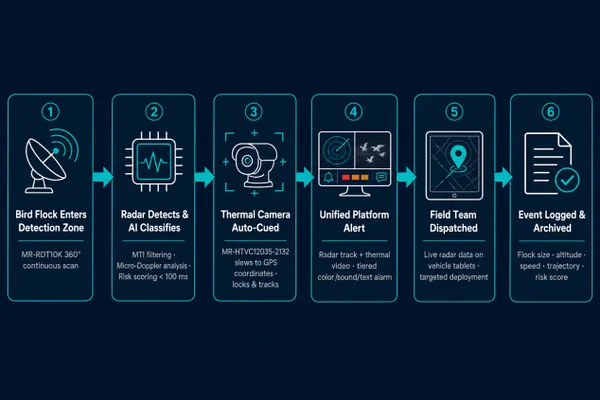
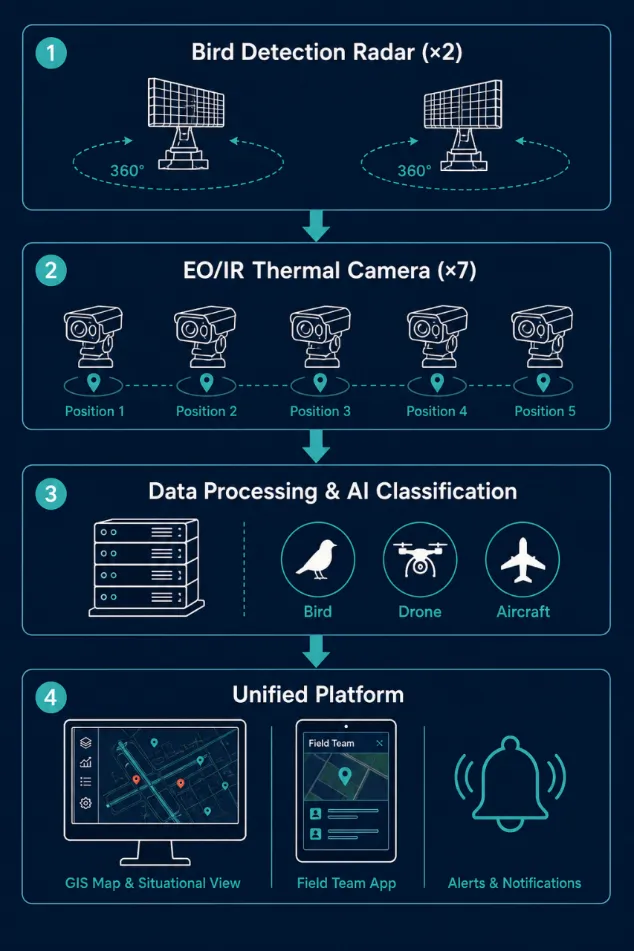
Kurulan sistem, Algılama → Takip ve Sınıflandırma → Uyarı ve Yanıt iş akışını takip eder. İki MR-RDT10K radarı sürekli 360° hava sahası kapsaması sağlar. Bir kuş hedefi algılandığında ve sınıflandırıldığında, platform en yakın MR-HTVC12035-2132 termal kamerayı görsel doğrulama için otomatik olarak yönlendirir, kontrol odasında kademeli uyarılar tetikler ve aynı anda canlı takip verilerini saha ekibi tabletlerine gönderir – algılamadan uyarı iletimine kadar 100 ms altı uçtan uca yanıt için tasarlanmıştır.
Çözüm
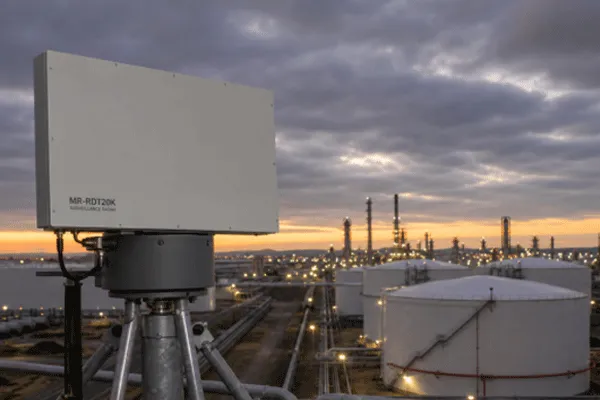
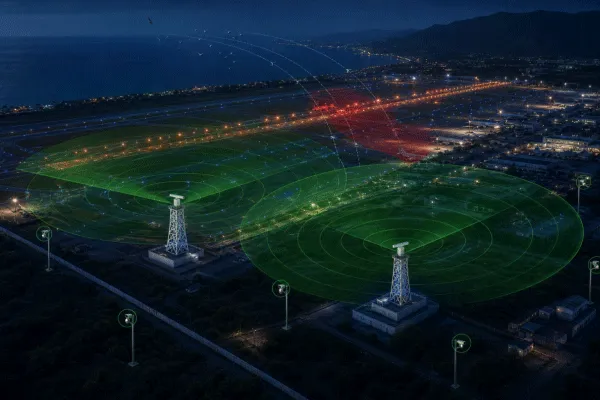
İki MR-RDT10K birimi, tam pist ortamı ve çevresindeki alçak irtifa hava sahası boyunca örtüşen kapsama sağlamak için konumlandırılmış 10 metrelik kırılabilir destek yapıları üzerine kurulmuştur. Mekanik azimut taraması ve yükseklik Dijital Işın Biçimlendirme (DBF) kullanarak MR-RDT10K, ışık veya hava koşullarına bakılmaksızın sürekli 360° gözetim sunacak şekilde tasarlanmıştır.
| Parametre |
Spesifikasyon |
| Açısal Kapsama |
360° sürekli |
| Yükseklik Kapsamı |
-° ila +60° |
| Maksimum Tespit İrtifası |
3.000 m |
| Algılama Menzili (RCS 1 m² / kuş sürüsü sınıfı) |
3,5 km – 20 km |
| Tespit Menzili (RCS 0,01 m² / küçük hedef) |
1,5 km – 10 km |
| Hedef Hız Aralığı |
1 m/s –150 m/s |
| Menzil Doğruluğu (RMS) |
≤5 m |
| Hız Doğruluğu (RMS) |
≤0,5 m/s |
| Açısal Doğruluk (AZ/EL, RMS) |
0,3° –0,4° |
| Eşzamanlı Hat Kapasitesi |
≤200 parça |
| Uçtan Uca Yanıt (tasarım hedefi) |
< 100 ms |
| Çalışma Sıcaklığı |
-0 °C ila +55 °C |
| Giriş Koruması |
IP66 |
MTI/GMTI algoritmaları, yer ve deniz parazitini bastırarak, geleneksel gözetleme radar geri dönüşlerinde gizlenecek olan bireysel büyük kuşlar ve küçük sürüler de dahil olmak üzere yavaş hareket eden, düşük RCS'li hedeflerin güvenilir bir şekilde tespit edilmesini sağlar. MR-RDT10K AI sınıflandırma motoru, kuş sürüleri, bireysel kuşlar, İHA'lar ve uçaklar arasında gerçek zamanlı olarak çoklu hedef ayrımı sağlar. Mikrodoppler özellik tanıma katmanı, ayrıca rotorla çalışan İHA yankılarını biyolojik kanat çırpma yapan kuş yankılarından sinyal işleme düzeyinde ayırt ederek, kuş olmayan hava hedeflerinden kaynaklanan gereksiz alarmları önemli ölçüde azaltır.
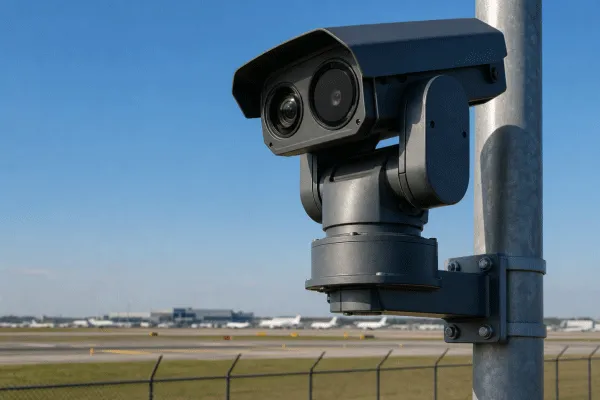
Yedi MR-HTVC12035-2132 PTZ termal kamera ünitesi, beş kurulum noktasına yerleştirilmiştir: üç yer seviyesi direk konumu, üç bina çatı konumu ve en yoğun göçmen yaklaşım koridorlarının daha geniş kapsamasını sağlayan bir yükseltilmiş kule konumu.
| Parametre |
Spesifikasyon |
| Algılama Menzili (araç / insan) |
21 km / 9 km |
| Termal Sensör |
VOx soğutmasız, 1280×1024 çözünürlüğe kadar |
| Spektral Yanıt |
7,5 µm – 14 µm |
| NETD |
45 mK |
| Termal Mercek |
25 mm – 325 mm, 13× sürekli zoom, otomatik odaklama |
| Görünür Kamera |
2.1 MP, 1/1.8–CMOS |
| Görünür Lens |
4,3 mm –141 mm, 30× optik zoom |
| Minimum Aydınlatma |
0,0002 lüks |
| PTZ Pan |
0°–60° sürekli |
| Çalışma Sıcaklığı |
-5 °C ila +60 °C |
| Koruma Seviyesi |
IP66, üçlü koruma kaplaması |
Termal kanal, göç eden kuş sürülerinin en aktif olduğu zamanlarda görünür ışık kameralarını bozulan koşullarda; tam karanlık, yağmur, sis ve doğrudan güneş arkası aydınlatma gibi durumlarda güvenilir hedef görüntülemesi sağlar. 21 km araç tespit menzili ve 9 km insan ölçeğinde tanıma menzili ile termal doğrulama, kuşlar kritik pist yakınlığına girmeden çok önce etkili kalır. Kamera yönlendirme, Midradar’ın optoelektronik bağlantı arayüzü üzerinden tamamen otomatik olarak yapılır –en yakın ünite hedefin GPS koordinatlarına döner, kilitlenir ve manuel kontrol gerektirmeden takibe başlar.
Birleştirilmiş Kuş Risk Yönetimi Platformu
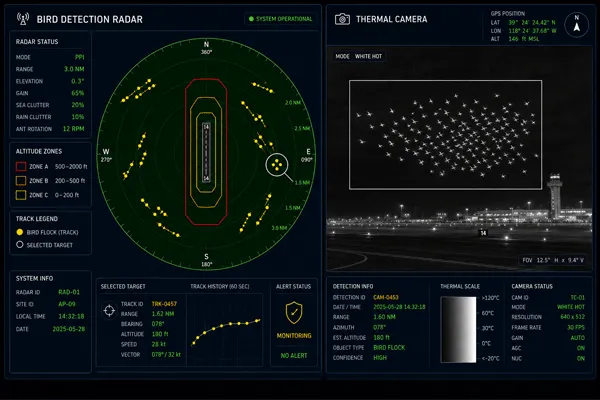
Entegre platform, tam operasyonel yetenek setini sunar havaalanı kuş çarpmasını önleme:
• Birleşik durumsal gösterim: Radar izleri, termal ve görünür video, uçak hareketleri (MLAT entegrasyonu) ve risk bölgesi kaplamaları tek bir GIS (CBS) tabanlı operatör arayüzünde
• Risk bölgesi yönetimi: Koşu yolu segmentleri ve yaklaşma koridorları, yatay ve yükseklik tabanlı katmanlara ayrılmış olup, her biri yapılandırılabilir bağımsız uyarı eşiklerine sahiptir
• Hedef veri kaydı: Her izlenen olay, GPS koordinatları, irtifa, menzil, hız, yön, sürü büyüklüğü tahmini ve sınıflandırma etiketi ile kaydedilir
• Kuş risk puanlaması: Sürünün büyüklüğünü, hızını, irtifasını, rotasını ve aktif pist bölgelerine yakınlığını entegre eden gerçek zamanlı risk indeks hesaplaması
• Yörünge oynatma ve istatistikler: Bölge, zaman ve hedef türüne göre sorgulanabilir tam tarihsel iz verisi; düzenleyici belgeler ve habitat yönetimi için otomatik raporlama
• Tablet saha arayüzü: Kuş kontrol devriye ekipleri için araçlara monte edilmiş tabletlerde canlı radar izleme ekranı – kontrol merkezinden ses iletimi olmadan hedefe yönelik dağıtımı mümkün kılar
• Sistem yedekliliği: Tek bir arıza noktasını ortadan kaldırmak için tasarlanmış yedek işlem sunucuları ve dayanıklı ağ mimarisi
• Entegrasyona hazır: ATIS, MLAT, UAM platformları ve drone karşıtı etkinleştirici sistemler için açık arayüzler
Sistem Mimarisi
Dağıtım Öne Çıkanları
Kırılabilir yapı tasarımı ve uyumluluk: Her iki MR-RDT10K destek yapısı da kurulmadan önce yapısal yük hesaplamaları, çarpışma analizi ve zemin stabilitesi doğrulaması gerektirdi; bu işlemler, kırılabilir yapı için havacılık güvenliği düzenlemelerine uygun olarak havaalanı otoritesi ve sivil havacılık düzenleyici kuruluşuyla koordine edilmiştir.
Sadece gece kurulumu: Havaalanının canlı iletişim altyapısıyla tüm entegrasyon, çok aylık bir program kapsamında gece bakım pencereleri sırasında gerçekleştirildi ve hava trafik kontrolü, tesis yönetimi ve kurulum ekibi arasında uçuş operasyonlarının sürekliliğini korumak için koordinasyon gerektirdi.
Çoklu radar ortamında RF koordinasyonu: Mevcut sahada yaklaşım radarı, yüzey hareket radarı ve hava durumu radarı zaten çalışırken, MR-RDT10K için frekans tahsisi, Detaylı Tasarım sırasında tam bir radyo dalgası simülasyonu ve RF ortamı incelemesi gerektirdi ve ardından resmi ulusal frekans lisanslaması yapıldı.
12 aylık mevsimsel optimizasyon: İnşaat tesliminin ardından, özel bir optimizasyon aşaması MR-RDT10K hassasiyet eşiklerini kalibre etti, risk bölgesi uyarı parametrelerini ayarladı ve gerçek gözlemlenen bir sezonsal kuş aktivitesi döngüsünü kullanarak AI sınıflandırma performansını geliştirdi – yerel tür kompozisyonu, göç zamanlaması, sürü büyüklüğü değişimi ve havalimanının operasyonel programını dikkate alarak.
Sonuçlar
Devreye alınma ve optimizasyonun ardından, havaalanı tüm operasyon saatleri ve hava koşulları boyunca tepkisel görsel gözlemden, proaktif ve veri odaklı kuş riski yönetimine geçti. Optimizasyon aşamasında aşağıdaki operasyonel iyileştirmeler gerçekleştirildi ve doğrulandı:
• Sürekli her hava koşulunda pist kapsaması: Radar katmanı, önceki dönemlerde izlenemeyen gece ve düşük görüş mesafesi koşullarında tespit yeteneği sağlayarak, ek personel gerektirmeden tüm operasyonel saatleri kapsar
• Genişletilmiş erken uyarı menzili: Kuş etkinliği şimdi sürüler kritik pist yakınlığına yaklaşmadan önce menzil içinde izleniyor, bu da saha ekiplerine uçak hareketinden önce dağıtım önlemlerini devreye sokma zamanı veriyor – önceki reaktif modelden temel bir değişim
• Tutarlı, derecelendirilmiş uyarı iş akışı: Otomatik katmanlı uyarılar, sınıflandırılmamış görsel gözlemleri değiştirir ve tüm vardiyalar ile hava koşullarında standart yanıt kararlarını mümkün kılar
• Yapılandırılmış olay başına dokümantasyon: İzlenen her olay sürü büyüklüğü tahmini, irtifa, hız, yörünge ve risk puanı ile kaydedilir – manuel gözlemle üretilemeyen nesnel olay kaydını sağlar
• Hedeflenmiş saha ekibi görevlendirmesi: Kuş kontrol devriye araçları, sabit devriye rotalarında çalışmak yerine aktif tehdit bölgelerine canlı radar verileriyle yönlendirilir
• Mevsimsel kuş aktivitesi veritabanı: 12 aylık optimizasyon süreci, havaalanı yetkililerine havaalanı çevresindeki habitat yönetimi kararları için veri temeli sağlayan sürekli bir mekansal ve zamansal kuş aktivitesi kaydı üretti
Not: Vuruş oranı düşüşü ve sistem düzeyinde yanlış alarm oranları da dahil olmak üzere nicel metrikler, devam eden havaalanı yetkilisi incelemelerine ve gizlilik gerekliliklerine tabidir. Operasyonel performans verileri, yetkilendirme sonrasında güncellenecektir.
Sık Sorulan Sorular
Radar neden gereklidir – termal kameralar tek başına havalimanı kuş tespiti yapabilir mi?
Termal kameralar, görsel doğrulama ve yakın mesafe tanımlama için oldukça etkilidir, ancak havaalanı ölçeğinde geniş alan, hacimsel ve her türlü hava koşulunda tespit sağlayamazlar. MR-RDT10K, tam karanlıkta veya sıfır görüş koşullarında sürekli olarak birkaç kilometre yarıçapında tarama yapmak üzere tasarlanmıştır — herhangi bir kamera tabanlı sistemin temel fiziksel sınırlamalarla karşılaştığı ortamlar. Sürü yoğunluğu ölçümü, irtifa dağılımı haritalama ve tüm bir havaalanı hava sahası hacminde aynı anda yüzlerce hedefin takibi radar fonksiyonlarıdır. Radar tespiti ile termal kamera doğrulamasının kombinasyonu, profesyonel havaalanı kuş çarpması önleme sistemleri için kabul edilmiş standarttır.
MR-RDT10K kuşları, uçakları ve dronları aynı anda nasıl ayırt ediyor?
MR-RDT10K AI sınıflandırma motoru, tek bir sensörden kuş sürüleri, bireysel kuşlar, İHA’lar ve hava araçları arasında çoklu sınıf hedef ayrımı sağlar. Mikro-Doppler özellik tanıma, rotorla çalışan İHA yankılarını biyolojik kanat çırpma ile oluşan kuş yankılarından sinyal işleme düzeyinde ayırt eder. Mevcut MLAT altyapısından elde edilen uçak hareket verileri, birleşik hava resim farkındalığı için ekranda üst üste bindirilebilir ve operatör seçimiyle kapatılabilir. Bu katmanlı yaklaşım, normal havaalanı operasyonları sırasında kuş olmayan hava hedeflerinden gelen yanlış alarmları en aza indirmek için tasarlanmıştır.
Rahatsız edici alarmlardan kaçınmak için uyarı eşikleri nasıl kalibre edilir?
12 aylık optimizasyon aşaması, belirli havaalanındaki gerçek kuş aktivitesi verilerinin bir tam mevsimsel döngüsü kullanılarak tüm uyarı parametrelerini kalibre eder – yerel tür bileşimi, tipik sürü boyutları, göç zamanlaması ve aktif pist işletme programları. Bu, genel fabrika varsayılanları yerine siteye özgü bir alarm yapılandırması üretir ve sistemin belirli operasyonel ortam için tespit hassasiyeti ile rahatsız edici alarm oranı arasında denge kurmasını sağlar.
Sistem mevcut kuş dağıtma ekipmanları ve gelecekteki anti-drone platformları ile bağlanabilir mi?
Evet. Midradar’ın standart arayüzleri, akustik, lazer ve piroteknik dağıtım cihazlarıyla bağlantıyı destekler ve mevcut ekipmanların radar tarafından tespit edilen kuş aktivitelerine dayanarak otomatik olarak tetiklenmesine olanak tanır. Platform ayrıca ATIS, UAM operasyonel platformları ve anti-drone etkileyici sistemler için açık entegrasyon arayüzleri sunar – kuş tespitine yapılan yatırımı, havalimanının daha geniş düşük irtifa hava sahası yönetimi yol haritasıyla mimari olarak uyumlu tutar.